Product overview
What Cloud-Based CRM Solution delivers
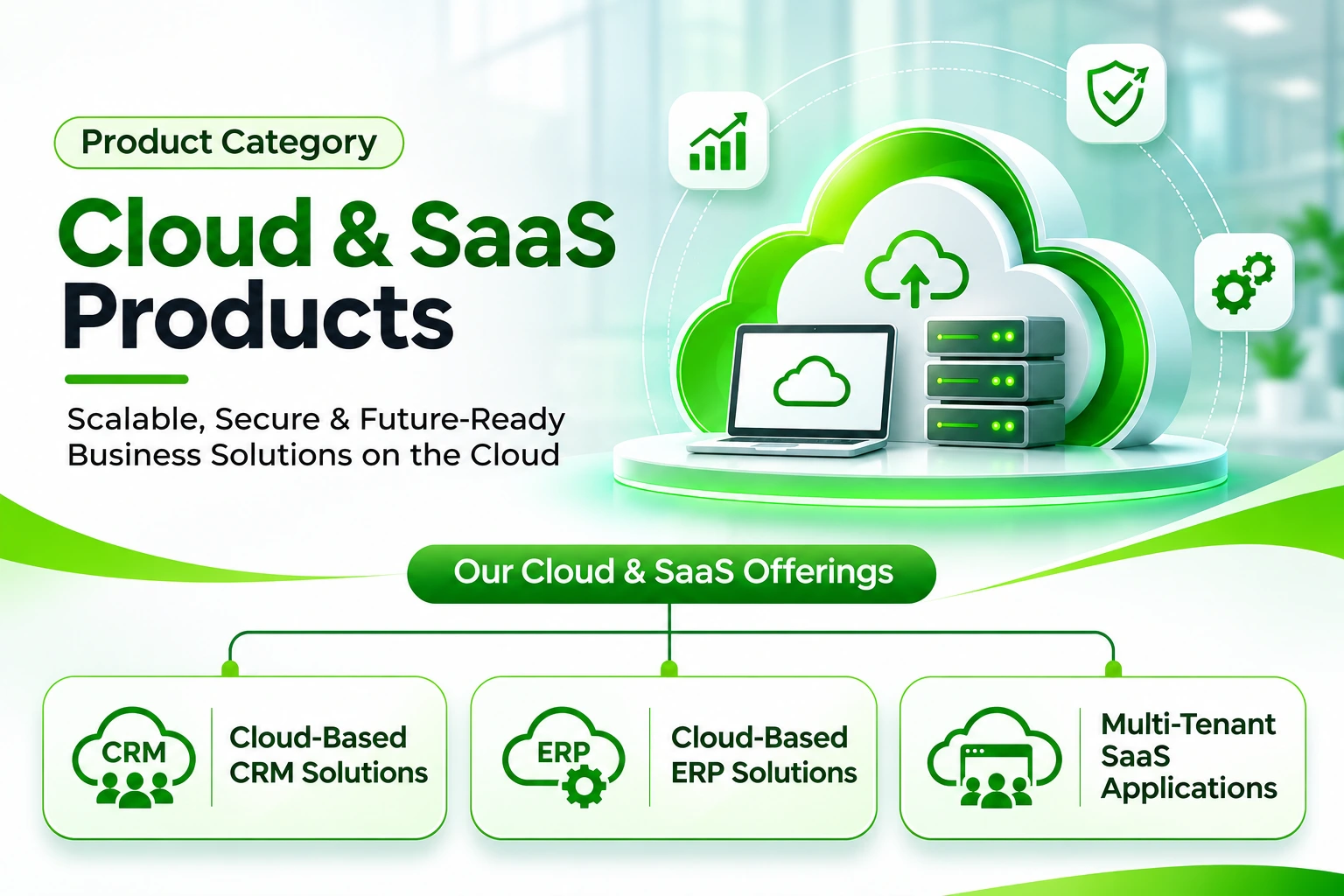
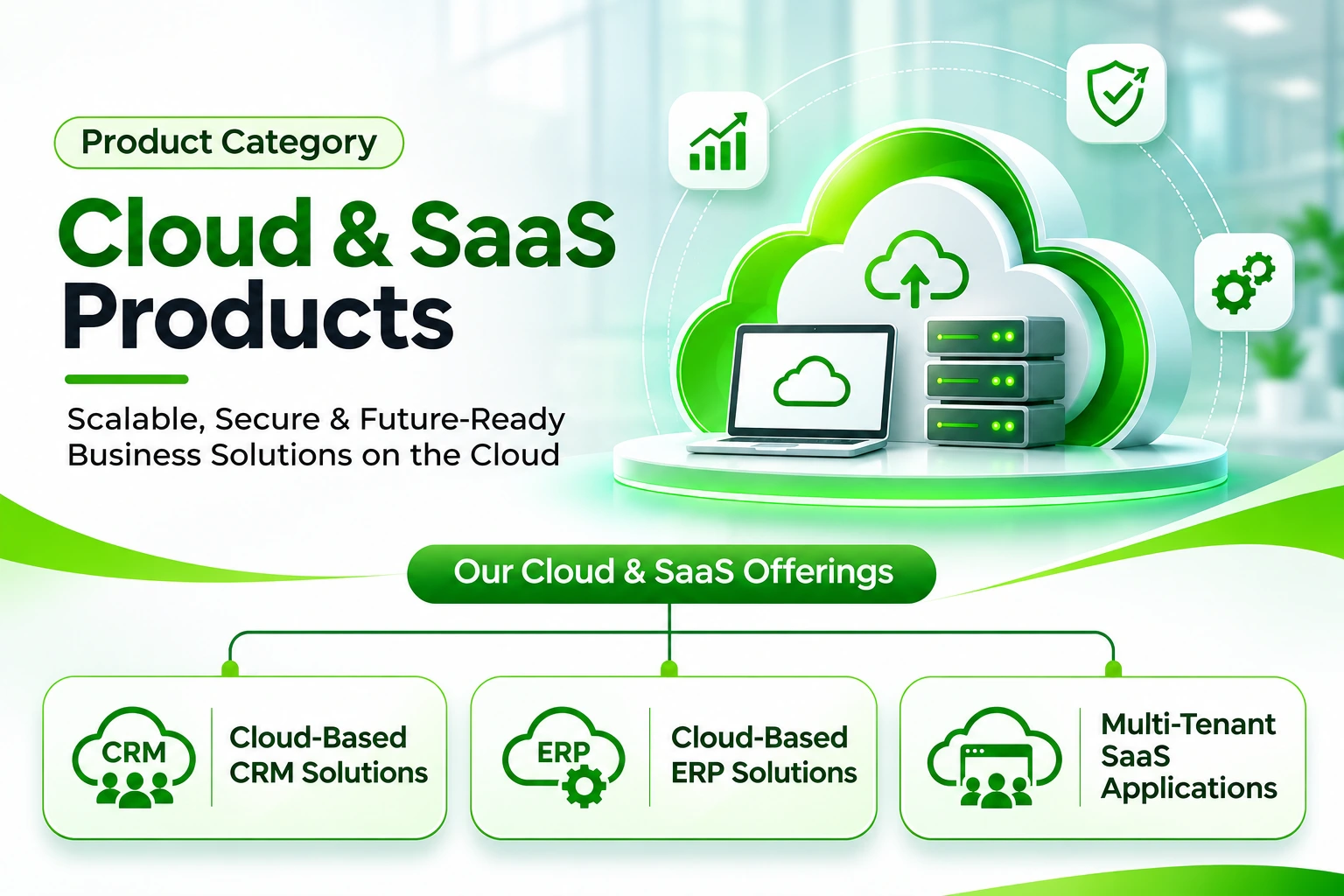
Comprehensive software modules designed for cloud & saas products operations.
What Is Cloud-Based CRM Solution
Cloud-Based CRM Solution is a software category providing customer relationship management—sales pipelines, marketing automation hooks, service cases, and customer 360 views—via secure cloud applications accessible to distributed teams without VPN into on-prem servers. Revenue and service leaders adopt cloud CRM when field reps, hybrid workers, and partner channels need reliable mobile access and frequent feature updates.
Organizations choose Cloud-Based CRM to deploy faster, integrate with other cloud tools, and scale user counts elastically during campaigns or seasonal support spikes. The category includes custom cloud CRM builds and tailored implementations connecting marketing, sales, and service around authoritative customer records finance and ops trust.
B2B SaaS, real estate, healthcare sales, distribution, professional services, and ecommerce brands evaluate Cloud-Based CRM when spreadsheet CRM or legacy on-prem limits collaboration and reporting. Franchises also centralize CRM in cloud for partner visibility with governance.
Operational Scope
Teams typically configure Cloud-Based CRM Solution around master data, approval paths, role permissions, and reporting cadences that mirror how Cloud & SaaS Products buyers operate day to day. Core capabilities such as Cloud Sales Pipeline, Marketing Automation Cloud, Service Cloud Cases, Customer 360 Data Model are phased during rollout so departments adopt structured workflows without disrupting customer-facing commitments. Leadership gains consolidated visibility while functional teams retain controls suited to their responsibilities.
When Organizations Evaluate Cloud-Based CRM Solution
Organizations begin formal evaluation when field reps cannot update pipelines offline or on mobile reliably with legacy crm; marketing and service data sit outside sales crm, breaking customer 360 views; on-prem crm upgrade projects defer needed features for years due to it queues. These signals often appear after growth in users, locations, transaction volume, or compliance obligations. At that stage, patching spreadsheets or bolting on isolated tools costs more than implementing a category-aligned platform with clear ownership and integration standards.
Key Business Challenges
Before adopting Cloud-Based CRM Solution, many organizations struggle with process fragmentation and inconsistent data. Common issues include:
- Field reps cannot update pipelines offline or on mobile reliably with legacy CRM.
- Marketing and service data sit outside sales CRM, breaking customer 360 views.
- On-prem CRM upgrade projects defer needed features for years due to IT queues.
- Integration with cloud ecommerce, billing, and support tools requires modern APIs.
- Per-seat license costs climb without adoption discipline and process alignment.
Left unaddressed, these operational gaps slow decision-making, increase rework, and make it harder to hold teams accountable for service levels or financial outcomes. Stakeholders across finance, operations, and customer-facing functions feel the impact through delayed reports, disputed numbers, and manual follow-ups that should be automated within Cloud-Based CRM Solution. A structured software category addresses root causes rather than symptoms.
Business Benefits
When implemented with clear scope and ownership, Cloud-Based CRM Solution can deliver measurable improvements across operations and management visibility:
- Gives sales, marketing, and service unified cloud access from web and mobile.
- Integrates email, calendar, telephony, and chat channels into activity timelines.
- Connects marketing campaigns to opportunities with attribution and SLA handoffs.
- Supports case management linked to orders and subscriptions for service context.
- Scales users and storage for campaigns without hardware procurement delays.
- Receives feature updates and security patches on managed release schedules.
- Embeds dashboards for pipeline, CSAT, and campaign ROI leadership reviews weekly.
- Offers API ecosystems connecting ERP, billing, and product usage data.
Measured over quarters rather than weeks, investments in Cloud-Based CRM Solution often show improvements in gives sales, marketing, and service unified cloud access from web and mobile; integrates email, calendar, telephony, and chat channels into activity timelines; connects marketing campaigns to opportunities with attribution and sla handoffs. Organizations with executive sponsorship, clean master data, and phased training typically see faster adoption and fewer rollback requests. The category also creates a foundation for analytics, automation, and integration projects that would be expensive to layer onto disconnected tools.
Core Modules
The following modules are commonly configured within Cloud-Based CRM Solution implementations. RS Top Coder tailors module depth, approvals, and integrations based on your Cloud & SaaS Products requirements:
- Cloud Sales Pipeline — Manages leads, accounts, opportunities, and forecasts collaboratively online.
- Marketing Automation Cloud — Runs campaigns, nurtures, and scores leads syncing to sales records.
- Service Cloud Cases — Tracks tickets, SLAs, and knowledge with customer context attached.
- Customer 360 Data Model — Unifies contacts, contracts, orders, and interactions with deduplication rules.
- Mobile CRM Apps — Updates pipelines, logs visits, and scans cards in the field offline-tolerant.
- Integration & iPaaS Layer — Syncs ERP, ecommerce, billing, and support tools bidirectionally.
- Analytics & Dashboards — Visualizes conversion, cycle length, CSAT, and campaign influence.
- Security & Admin Cloud Controls — Manages roles, field security, SSO, and audit logs centrally.
Module depth is configured to match your operating model rather than enabling every feature on day one. RS Top Coder documents data flows between Cloud Sales Pipeline, Marketing Automation Cloud, Service Cloud Cases, Customer 360 Data Model, defines approval thresholds, and validates that each module produces the reports your managers rely on during daily and monthly reviews. Integrations with accounting, CRM, ERP components, payment gateways, HR systems, and custom APIs are scoped during discovery so duplicate entry is minimized from go-live.
Industries We Serve
Cloud-Based CRM Solution is evaluated by organizations that need dependable software for daily execution and leadership oversight. RS Top Coder frequently supports:
- B2B Technology & SaaS — Teams needing cloud CRM integrated to product usage and billing.
- Real Estate & Property Sales — Developers coordinating site visits and broker channels online.
- Healthcare Sales & Outreach — Organizations managing referral relationships with compliance controls.
- Wholesale & Distribution — Reps tracking accounts, schemes, and reorders from the road.
- Professional Services — Firms linking CRM to projects, proposals, and utilization.
- E-Commerce & Retail CRM — Brands unifying D2C customer service and repeat purchase marketing.
Regardless of sector, successful deployments align terminology, compliance needs, and KPI definitions with how teams already measure performance. RS Top Coder frequently supports organizations in B2B Technology & SaaS, Real Estate & Property Sales, Healthcare Sales & Outreach, Wholesale & Distribution, adapting workflows while keeping the platform maintainable for internal administrators. Sector experience reduces rework during configuration and helps anticipate audit, integration, and reporting requirements early in the project.
Why Choose RS Top Coder
RS Top Coder delivers Cloud-Based CRM Solutions—custom or integrated stacks—with adoption-focused rollout: data migration, inside sales training, and service desk workflows validated before marketing automation complexity arrives. We connect CRM to ERP and billing so customer records reflect reality reps can defend on calls.
Implementation Methodology
RS Top Coder follows a structured delivery path: discovery workshops, process mapping, solution design, iterative configuration, integration testing, user acceptance, and phased go-live. We document assumptions, migration rules, and rollback plans so stakeholders know what happens at each milestone. Training materials and admin guides are tailored to roles rather than delivering generic manuals that teams rarely use.
Post-Launch Support
After launch, our team supports performance tuning, new branch or department onboarding, additional integrations, and reporting changes as your business evolves. Issue triage, enhancement backlogs, and release planning are handled transparently so internal IT and business owners share the same roadmap. This ongoing partnership keeps Cloud-Based CRM Solution aligned with operational reality instead of freezing at initial configuration.
Product lineup
19 modules in this catalog
01
Lead Management
9 features
02
Contact & Account Management
9 features
03
Opportunity Pipeline
9 features
04
Sales Forecasting
9 features
05
Marketing Campaigns
9 features
06
Email Automation
9 features
07
Case Management
9 features
08
Knowledge Base
9 features
09
Quote & Proposal
9 features
10
Contract Management
9 features
11
Customer Portal
9 features
12
CRM Mobile
9 features
13
Activity & Task Management
9 features
14
Territory & Quota Management
9 features
15
Integration Hub
9 features
16
Analytics & Reporting
9 features
17
Security & Privacy
9 features
18
Tenant Administration
9 features
19
Partner Channel Management
9 features
Full catalog
Product modules & capabilities
Expand each product to review its feature set.
01 Lead Management Captures inbound and outbound leads from web forms, imports, events, and partner referrals in a multi-tenant cloud CRM. Sales development teams apply deduplication, assignment rules, and qualification workflows with complete audit trails across the lead lifecycle. The module operates in a multi-tenant cloud deployment with role-based access, audit logging, and integration hooks to adjacent CRM.
02 Contact & Account Management Maintains person and organization records with hierarchy, relationship mapping, and shared ownership in a cloud CRM tenant. Account executives and service teams use unified profiles to coordinate activities, documents, and communication history across customer lifecycles. The module operates in a multi-tenant cloud deployment with role-based access, audit logging, and integration hooks to.
03 Opportunity Pipeline Manages deal progression through configurable sales stages with probability weighting, mandatory fields, and close-date discipline in cloud CRM. Sales managers monitor pipeline health, enforce stage criteria, and coordinate handoffs between reps and overlay teams. The module operates in a multi-tenant cloud deployment with role-based access, audit logging, and integration hooks to adjacent CRM.
04 Sales Forecasting Aggregates rep, team, and regional forecasts from pipeline data and manager adjustments in a cloud CRM forecasting module. Revenue operations teams reconcile commit categories, track forecast accuracy, and publish roll-ups for leadership review cycles. The module operates in a multi-tenant cloud deployment with role-based access, audit logging, and integration hooks to adjacent CRM capabilities.
05 Marketing Campaigns Plans, executes, and measures marketing campaigns linked to leads, contacts, and opportunities in cloud CRM. Marketing operations teams define audiences, track responses, attribute pipeline influence, and coordinate with sales on follow-up SLAs. The module operates in a multi-tenant cloud deployment with role-based access, audit logging, and integration hooks to adjacent CRM capabilities.
06 Email Automation Orchestrates triggered and scheduled email sequences tied to CRM records in a multi-tenant cloud environment. Marketing and sales teams configure templates, send limits, and compliance settings while tracking engagement on lead and contact timelines. The module operates in a multi-tenant cloud deployment with role-based access, audit logging, and integration hooks to adjacent CRM capabilities.
07 Case Management Tracks customer service cases from intake through resolution with queues, SLAs, and escalation paths in cloud CRM. Service agents and supervisors manage priorities, knowledge references, and customer communication while maintaining complete case histories. The module operates in a multi-tenant cloud deployment with role-based access, audit logging, and integration hooks to adjacent CRM.
08 Knowledge Base Hosts searchable articles, FAQs, and procedures for agents and customers within the cloud CRM tenant. Content authors publish approved articles linked to products and case categories to deflect repeat inquiries and standardize resolutions. The module operates in a multi-tenant cloud deployment with role-based access, audit logging, and integration hooks to adjacent CRM capabilities.
09 Quote & Proposal Generates customer quotes and proposals from opportunity product lines with pricing rules and approval gates in cloud CRM. Sales reps and deal desk teams produce consistent documents, track versions, and convert accepted quotes to orders or contracts. The module operates in a multi-tenant cloud deployment with role-based access, audit logging, and integration hooks to adjacent CRM capabilities.
10 Contract Management Stores contract records linked to accounts and opportunities with renewal dates, entitlements, and amendment history in cloud CRM. Legal and customer success teams monitor obligations, trigger renewal workflows, and align service delivery to contracted terms. The module operates in a multi-tenant cloud deployment with role-based access, audit logging, and integration hooks to adjacent CRM.
11 Customer Portal Provides authenticated web access for customers to view cases, knowledge articles, quotes, and account information hosted in cloud CRM. Portal administrators configure branding, data visibility, and self-service actions per customer segment. The module operates in a multi-tenant cloud deployment with role-based access, audit logging, and integration hooks to adjacent CRM capabilities.
12 CRM Mobile Delivers field sales and service capabilities on phones and tablets synchronized with cloud CRM records. Mobile users access pipelines, log activities, scan business cards, and work offline with controlled sync when connectivity returns. The module operates in a multi-tenant cloud deployment with role-based access, audit logging, and integration hooks to adjacent CRM capabilities.
13 Activity & Task Management Coordinates calls, meetings, tasks, and reminders linked to CRM records across sales and service teams in the cloud. Users plan daily work from unified task lists while managers monitor overdue items and workload distribution. The module operates in a multi-tenant cloud deployment with role-based access, audit logging, and integration hooks to adjacent CRM capabilities.
14 Territory & Quota Management Defines sales territories, account assignments, and quota targets aligned to fiscal periods in cloud CRM. Sales operations maintains territory models, resolves overlaps, and distributes quotas with visibility for reps and managers. The module operates in a multi-tenant cloud deployment with role-based access, audit logging, and integration hooks to adjacent CRM capabilities.
15 Integration Hub Connects cloud CRM to ERP, marketing, telephony, and identity systems through managed APIs and event flows. Integration administrators configure endpoints, monitor sync status, and resolve errors without custom middleware for standard patterns. The module operates in a multi-tenant cloud deployment with role-based access, audit logging, and integration hooks to adjacent CRM capabilities.
16 Analytics & Reporting Delivers dashboards, standard reports, and ad hoc analysis on CRM data stored in the cloud tenant. Business analysts build datasets, schedule distributions, and embed visuals for sales, marketing, and service leadership reviews. The module operates in a multi-tenant cloud deployment with role-based access, audit logging, and integration hooks to adjacent CRM capabilities.
17 Security & Privacy Governs authentication, authorization, encryption, and privacy controls for cloud CRM tenants. Security administrators configure policies, review access, and support compliance audits across customer data processing activities. The module operates in a multi-tenant cloud deployment with role-based access, audit logging, and integration hooks to adjacent CRM capabilities.
18 Tenant Administration Manages tenant configuration, user lifecycle, licenses, and environment settings for cloud CRM deployments. Tenant administrators provision users, maintain picklists, and coordinate sandbox promotion without vendor support for routine tasks. The module operates in a multi-tenant cloud deployment with role-based access, audit logging, and integration hooks to adjacent CRM capabilities.
19 Partner Channel Management Supports partner onboarding, deal registration, and co-selling workflows within cloud CRM for indirect sales channels. Channel managers track partner performance, MDF requests, and registered opportunities alongside direct sales pipelines. The module operates in a multi-tenant cloud deployment with role-based access, audit logging, and integration hooks to adjacent CRM capabilities.
FAQs
Common questions about Cloud-Based CRM Solution
What is a Cloud-Based CRM Solution and who should use it?
Cloud-Based CRM Solution is a software category delivering sales, marketing, and service customer management via internet-accessible cloud applications for distributed teams. Organizations use it when on-prem CRM or spreadsheets limit mobility, integration, and update cadence. Revenue and service leaders evaluating pipeline visibility, campaign attribution, and case context commonly choose cloud CRM—implemented or custom—when hybrid work and partner channels require always-on access with centralized governance.
How is cloud CRM different from on-premise CRM?
Cloud CRM eliminates client server maintenance, enables faster feature delivery, and supports remote access natively while integrating modern SaaS ecosystems via APIs. On-prem CRM may suit extreme data residency constraints but often slows innovation. RS Top Coder helps evaluate tradeoffs including TCO, compliance, and integration needs. Hybrid models sync cloud CRM with on-prem ERP frequently—integration architecture matters as much as CRM hosting choice.
Can cloud CRM integrate with ERP, marketing tools, and support desks?
Yes. Cloud CRM integrates with ERP for orders and invoices, marketing automation for campaigns, telephony for call logging, and helpdesks for case continuity. RS Top Coder defines master data ownership and sync frequency preventing duplicates. Integrations turn CRM into operational hub—not contact graveyard—when customer-facing teams see financial and service facts during every interaction without swivel-chair research.
Why choose RS Top Coder for Cloud-Based CRM?
RS Top Coder delivers Cloud-Based CRM with sales and service process discovery, migration reconciliation, and integration testing finance verifies. We measure adoption and forecast accuracy improvements post go-live, tuning stages and dashboards until managers rely on CRM in weekly reviews—not parallel spreadsheets maintained because trust lagged after poor past implementations.
Explore further
Related pages
Evaluate Cloud-Based CRM Solution for your team
Schedule a walkthrough tailored to your workflows, integrations, and rollout timeline.
Book a product demo