Product overview
What Multi-Tenant SaaS Application delivers
Comprehensive software modules designed for cloud & saas products operations.
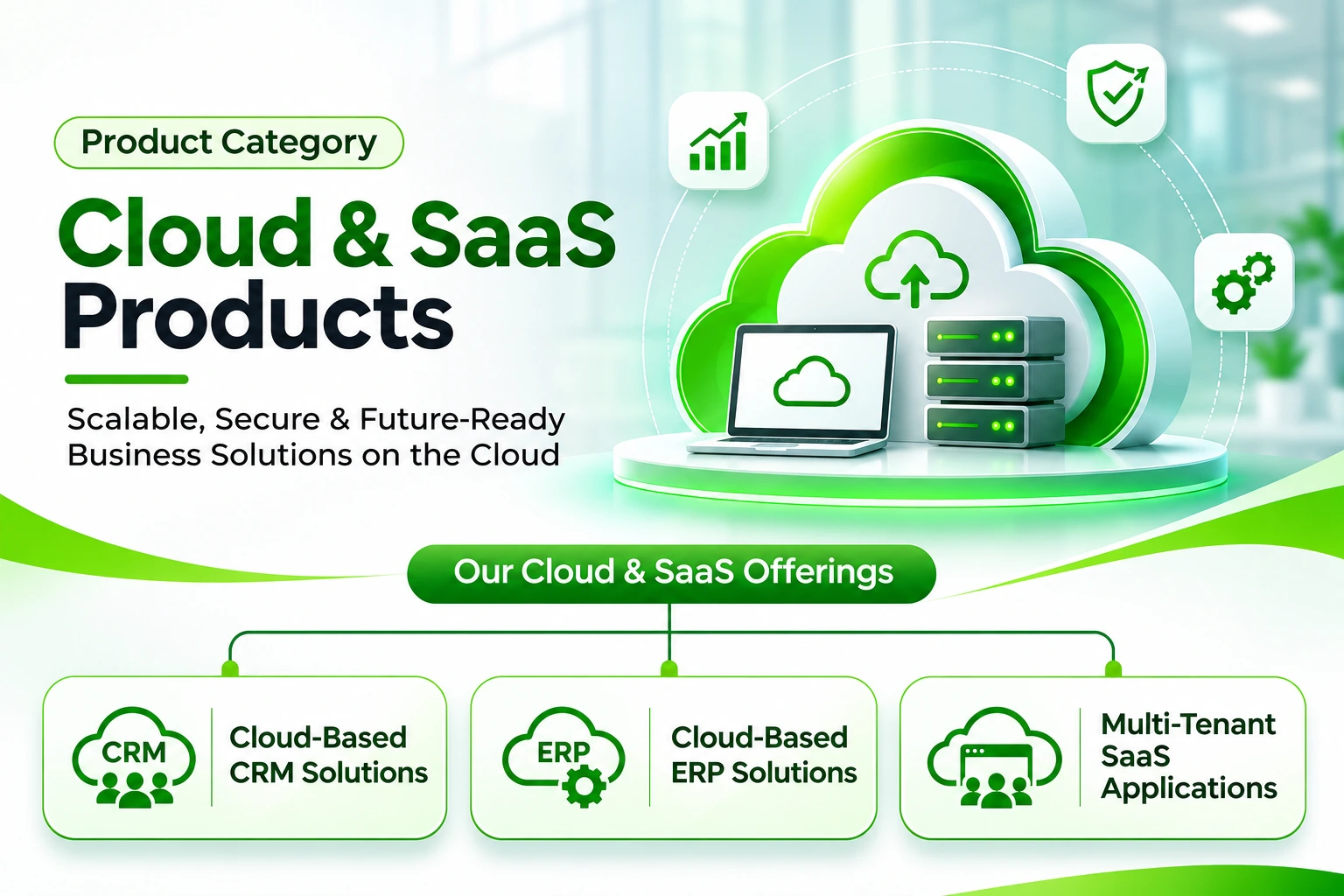
What Is Multi-Tenant SaaS Application
Multi-Tenant SaaS Application is a cloud software category where a single deployed application serves many customer organizations with logical isolation of data, configuration, branding, and entitlements while sharing infrastructure efficiently. Product companies adopt multi-tenancy when per-customer deployments become operationally and economically unsustainable as subscriber count grows.
Builders choose Multi-Tenant SaaS Application architecture to reduce hosting costs, simplify releases, and onboard customers instantly while maintaining security boundaries auditors expect. The category includes tenant provisioning, subdomain or custom domain mapping, plan-based feature flags, and noisy-neighbor protections via rate limits and resource quotas.
Vertical SaaS for property, healthcare admin, logistics, HR, and education, horizontal B2B tools, and internal products commercialized externally evaluate multi-tenant builds. MSPs also deliver multi-tenant management consoles reselling configured instances.
Operational Scope
Teams typically configure Multi-Tenant SaaS Application around master data, approval paths, role permissions, and reporting cadences that mirror how Cloud & SaaS Products buyers operate day to day. Core capabilities such as Tenant Provisioning & Lifecycle, Isolation & Security Layer, Subscription & Entitlements, Custom Domains & Branding are phased during rollout so departments adopt structured workflows without disrupting customer-facing commitments. Leadership gains consolidated visibility while functional teams retain controls suited to their responsibilities.
When Organizations Evaluate Multi-Tenant SaaS Application
Organizations begin formal evaluation when single-tenant codebases require expensive rewrites before scaling subscriber count; weak isolation risks cross-tenant data leaks with catastrophic trust impact; noisy tenants degrade performance for others without quotas and monitoring. These signals often appear after growth in users, locations, transaction volume, or compliance obligations. At that stage, patching spreadsheets or bolting on isolated tools costs more than implementing a category-aligned platform with clear ownership and integration standards.
Key Business Challenges
Before adopting Multi-Tenant SaaS Application, many organizations struggle with process fragmentation and inconsistent data. Common issues include:
- Single-tenant codebases require expensive rewrites before scaling subscriber count.
- Weak isolation risks cross-tenant data leaks with catastrophic trust impact.
- Noisy tenants degrade performance for others without quotas and monitoring.
- Per-tenant customization demands configuration models—not hardcoded forks.
- Release regressions affect all tenants simultaneously without staged rollouts.
Left unaddressed, these operational gaps slow decision-making, increase rework, and make it harder to hold teams accountable for service levels or financial outcomes. Stakeholders across finance, operations, and customer-facing functions feel the impact through delayed reports, disputed numbers, and manual follow-ups that should be automated within Multi-Tenant SaaS Application. A structured software category addresses root causes rather than symptoms.
Business Benefits
When implemented with clear scope and ownership, Multi-Tenant SaaS Application can deliver measurable improvements across operations and management visibility:
- Shares infrastructure while enforcing strict tenant scoping in data access layers.
- Provisions new customers automatically with default templates and trials.
- Maps custom domains and branding per tenant for white-label experiences.
- Applies plan entitlements controlling features, seats, and usage meters.
- Deploys updates once with canary tenants and feature flags reducing blast radius.
- Monitors per-tenant usage, errors, and billing events for support and finance.
- Scales horizontally on cloud autoscaling groups or serverless patterns.
- Supports enterprise tenants with dedicated resources or encryption keys when sold.
Measured over quarters rather than weeks, investments in Multi-Tenant SaaS Application often show improvements in shares infrastructure while enforcing strict tenant scoping in data access layers; provisions new customers automatically with default templates and trials; maps custom domains and branding per tenant for white-label experiences. Organizations with executive sponsorship, clean master data, and phased training typically see faster adoption and fewer rollback requests. The category also creates a foundation for analytics, automation, and integration projects that would be expensive to layer onto disconnected tools.
Core Modules
The following modules are commonly configured within Multi-Tenant SaaS Application implementations. RS Top Coder tailors module depth, approvals, and integrations based on your Cloud & SaaS Products requirements:
- Tenant Provisioning & Lifecycle — Creates, suspends, and deletes tenants with data retention policies.
- Isolation & Security Layer — Enforces tenant IDs in queries, storage prefixes, and auth token claims.
- Subscription & Entitlements — Links billing plans to feature flags and quota enforcement middleware.
- Custom Domains & Branding — Hosts tenant-specific URLs, logos, and email templates securely.
- Admin & Support Console — Impersonates tenants with logging for customer success and debugging.
- Multi-Tenant Observability — Tags logs and metrics by tenant for troubleshooting and SLA reporting.
- Release & Feature Flag System — Rolls out changes gradually per tenant cohort with rollback switches.
- Usage Metering & Billing Export — Tracks API calls, seats, or consumption for invoicing integrations.
Module depth is configured to match your operating model rather than enabling every feature on day one. RS Top Coder documents data flows between Tenant Provisioning & Lifecycle, Isolation & Security Layer, Subscription & Entitlements, Custom Domains & Branding, defines approval thresholds, and validates that each module produces the reports your managers rely on during daily and monthly reviews. Integrations with accounting, CRM, ERP components, payment gateways, HR systems, and custom APIs are scoped during discovery so duplicate entry is minimized from go-live.
Industries We Serve
Multi-Tenant SaaS Application is evaluated by organizations that need dependable software for daily execution and leadership oversight. RS Top Coder frequently supports:
- Vertical B2B SaaS — Founders productizing industry-specific workflows at scale.
- Horizontal Productivity Tools — Teams serving many SMB tenants on shared stacks.
- White-Label Platform Providers — Vendors letting partners resell branded tenant instances.
- Regulated SaaS Vendors — Providers offering tenant encryption and audit trails for enterprise sales.
- Internal Spin-Out Products — Corporates commercializing tools originally built for HQ only.
- API-First SaaS Products — Developers metering tenant API usage with rate limits and keys.
Regardless of sector, successful deployments align terminology, compliance needs, and KPI definitions with how teams already measure performance. RS Top Coder frequently supports organizations in Vertical B2B SaaS, Horizontal Productivity Tools, White-Label Platform Providers, Regulated SaaS Vendors, adapting workflows while keeping the platform maintainable for internal administrators. Sector experience reduces rework during configuration and helps anticipate audit, integration, and reporting requirements early in the project.
Why Choose RS Top Coder
RS Top Coder architects Multi-Tenant SaaS Applications with isolation tests, provisioning automation, and observability as sprint-one requirements—not retrofit panic after first enterprise security review. We help choose tenancy models honestly for your compliance market and implement billing hooks finance can reconcile without engineering spreadsheets.
Implementation Methodology
RS Top Coder follows a structured delivery path: discovery workshops, process mapping, solution design, iterative configuration, integration testing, user acceptance, and phased go-live. We document assumptions, migration rules, and rollback plans so stakeholders know what happens at each milestone. Training materials and admin guides are tailored to roles rather than delivering generic manuals that teams rarely use.
Post-Launch Support
After launch, our team supports performance tuning, new branch or department onboarding, additional integrations, and reporting changes as your business evolves. Issue triage, enhancement backlogs, and release planning are handled transparently so internal IT and business owners share the same roadmap. This ongoing partnership keeps Multi-Tenant SaaS Application aligned with operational reality instead of freezing at initial configuration.
Product lineup
19 modules in this catalog
01
Tenant Provisioning
9 features
02
Multi-Tenancy Architecture
9 features
03
Cloud Infrastructure Management
9 features
04
Auto-Scaling
9 features
05
SaaS Billing & Subscriptions
9 features
06
Data Isolation & Security
9 features
07
Custom Domains & White Label
9 features
08
Feature Entitlements & Plans
9 features
09
API Gateway & Developer Portal
9 features
10
Observability & Monitoring
9 features
11
Identity & Access Management
9 features
12
Configuration Management
9 features
13
Database Sharding & Tenant Routing
9 features
14
Backup & Disaster Recovery
9 features
15
Compliance & Audit Logging
9 features
16
Service Mesh & Microservices
9 features
17
Rate Limiting & Quota Management
9 features
18
Tenant Analytics & Usage Metering
9 features
19
Onboarding & Self-Service Portal
9 features
Full catalog
Product modules & capabilities
Expand each product to review its feature set.
01 Tenant Provisioning Automates creation and lifecycle management of tenant accounts including namespace allocation, default configuration, and initial admin credentials. Platform operators use it to onboard new customers with consistent baseline settings. The module supports approval workflows, sandbox tenants, and deprovisioning with data retention policies aligned to contractual obligations.
02 Multi-Tenancy Architecture Defines how application resources are shared or isolated across tenants using logical partitioning models such as shared schema, schema-per-tenant, or database-per-tenant. Architects and platform engineers configure tenancy strategy per deployment tier. The module documents isolation boundaries, routing rules, and migration paths between models.
03 Cloud Infrastructure Management Governs deployment of SaaS workloads across cloud regions including compute, networking, storage, and managed services. DevOps and platform teams use it to standardize infrastructure as code, environment promotion, and cost allocation by tenant tier. The module integrates with CI/CD pipelines and change management processes.
04 Auto-Scaling Adjusts compute and service capacity dynamically based on load metrics, queue depth, and scheduled demand patterns. SRE teams configure scaling policies to maintain latency targets while controlling cloud spend. The module supports horizontal pod scaling, database read replicas, and cooldown rules to prevent oscillation.
05 SaaS Billing & Subscriptions Manages recurring charges, invoicing, payment collection, and subscription lifecycle events for multi-tenant customers. Finance and billing operations configure plans, proration rules, and dunning workflows. The module integrates with payment gateways and exports revenue data for accounting systems.
06 Data Isolation & Security Enforces logical and physical separation of tenant data through encryption, access controls, and network policies. Security and compliance teams define isolation requirements per tier and region. The module supports encryption at rest and in transit, key management, and data residency constraints. Documentation and runbooks describe configuration boundaries, operational review procedures, and.
07 Custom Domains & White Label Enables tenants to serve the application under branded hostnames with TLS certificates and configurable UI themes. Customer success and professional services configure domain verification and DNS guidance. The module supports apex and subdomain mapping with automated certificate provisioning. Documentation and runbooks describe configuration boundaries, operational review procedures, and.
08 Feature Entitlements & Plans Maps subscription plans to enabled product capabilities and usage limits for each tenant. Product and engineering teams define entitlement keys tied to feature flags and UI visibility. The module synchronizes entitlements with billing events and supports temporary overrides for trials. Documentation and runbooks describe configuration boundaries, operational review procedures, and escalation.
09 API Gateway & Developer Portal Exposes tenant-aware REST and GraphQL endpoints with authentication, rate limiting, and version management. Developer relations teams publish documentation, SDKs, and sandbox credentials through the portal. The module supports OAuth flows, API keys, and webhook delivery for integrations. Documentation and runbooks describe configuration boundaries, operational review procedures, and escalation.
10 Observability & Monitoring Collects metrics, logs, and traces across multi-tenant services for operational visibility and incident response. SRE teams define dashboards, alerts, and SLOs per critical user journey. The module supports tenant-scoped filtering while protecting cross-tenant data in shared telemetry stores. Documentation and runbooks describe configuration boundaries, operational review procedures, and.
11 Identity & Access Management Manages tenant user directories, roles, permissions, and federation with enterprise identity providers. Security administrators configure SSO, MFA, and session policies per tenant. The module supports SCIM provisioning and separates platform operator access from tenant user access. Documentation and runbooks describe configuration boundaries, operational review procedures, and escalation paths.
12 Configuration Management Centralizes tenant-specific and platform-wide settings including feature parameters, integration credentials, and environment variables. Platform engineers use namespaced configuration with validation schemas and change history. The module supports hot reload for non-breaking updates and staged rollout of configuration changes.
13 Database Sharding & Tenant Routing Distributes tenant data across database shards or clusters to scale beyond single-instance limits. Database administrators define sharding keys, rebalance policies, and read routing rules. The module coordinates schema migrations and connection routing transparently to application services. Documentation and runbooks describe configuration boundaries, operational review procedures, and.
14 Backup & Disaster Recovery Protects tenant data through scheduled backups, geo-redundant storage, and tested recovery procedures. Operations teams define RPO and RTO targets per tier and document runbooks for regional failures. The module supports point-in-time recovery and tenant-selective restore for support scenarios. Documentation and runbooks describe configuration boundaries, operational review procedures, and.
15 Compliance & Audit Logging Captures immutable records of platform and tenant actions for regulatory and contractual audit requirements. Compliance officers configure retention, export formats, and access controls for audit data. The module supports SOC, GDPR, and industry-specific logging standards. Documentation and runbooks describe configuration boundaries, operational review procedures, and escalation paths for.
16 Service Mesh & Microservices Orchestrates inter-service communication with mTLS, traffic policies, and circuit breaking for multi-tenant microservice architectures. Platform engineers deploy sidecar or ambient mesh configurations across Kubernetes clusters. The module provides observability hooks and progressive delivery capabilities.
17 Rate Limiting & Quota Management Controls request throughput and resource consumption per tenant, API key, and endpoint to ensure fair platform usage. Operations teams configure limits aligned with commercial plans and infrastructure capacity. The module supports burst tokens, sliding windows, and graceful degradation responses. Documentation and runbooks describe configuration boundaries, operational review procedures, and.
18 Tenant Analytics & Usage Metering Aggregates operational and product usage metrics per tenant for billing, success, and product analytics. Data teams define event schemas and pipelines that respect tenant privacy boundaries. The module feeds data warehouses and real-time dashboards for internal and tenant-facing reporting. Documentation and runbooks describe configuration boundaries, operational review procedures, and escalation.
19 Onboarding & Self-Service Portal Delivers guided setup experiences for new tenants including workspace configuration, user invites, and integration wizards. Customer success configures onboarding checklists and milestone tracking. The module reduces time-to-value through contextual help and progress persistence. Documentation and runbooks describe configuration boundaries, operational review procedures, and escalation paths for.
FAQs
Common questions about Multi-Tenant SaaS Application
What is a Multi-Tenant SaaS Application and who should build one?
Multi-Tenant SaaS Application is a cloud software category where one deployment serves many customers with isolated data, settings, and entitlements efficiently. Product companies build multi-tenant architecture when single-tenant hosting costs or release complexity block growth. B2B SaaS founders and internal spin-offs commonly invest early if enterprise prospects ask about tenant isolation, custom domains, and centralized updates—requirements difficult to bolt onto single-tenant MVPs later without painful refactors.
How do you ensure tenant data isolation in SaaS?
Tenant isolation uses disciplined application scoping—tenant identifiers in every query, authorization middleware, separated storage namespaces, and automated tests attempting cross-tenant access. RS Top Coder documents threat models and conducts reviews before SOC2-minded clients onboard. Optional dedicated databases or encryption keys serve premium tiers. Monitoring alerts on anomalous cross-tenant query patterns support rapid incident response if bugs slip through otherwise rigorous code review gates.
Can multi-tenant SaaS support custom domains and branding per customer?
Yes. Multi-Tenant SaaS Applications map custom domains or subdomains to tenant contexts with TLS certificate automation and branded login, emails, and PDFs where scoped. RS Top Coder implements white-label settings stored per tenant without code forks. Enterprise buyers often require brand continuity for their users—especially partner portals—making branding first-class configuration, not professional services change requests each deal.
Why choose RS Top Coder for Multi-Tenant SaaS Application development?
RS Top Coder delivers multi-tenant products with architects experienced in SaaS economics, security reviews, and DevOps practices startups need before fundraising diligence. We ship provisioning, billing integration, and tenant-aware monitoring in early releases so growth teams onboard customers without engineering fire drills every week—sustainable scale, not demo-ware.
Explore further
Related pages
Evaluate Multi-Tenant SaaS Application for your team
Schedule a walkthrough tailored to your workflows, integrations, and rollout timeline.
Book a product demo