Product overview
What Manufacturing ERP delivers
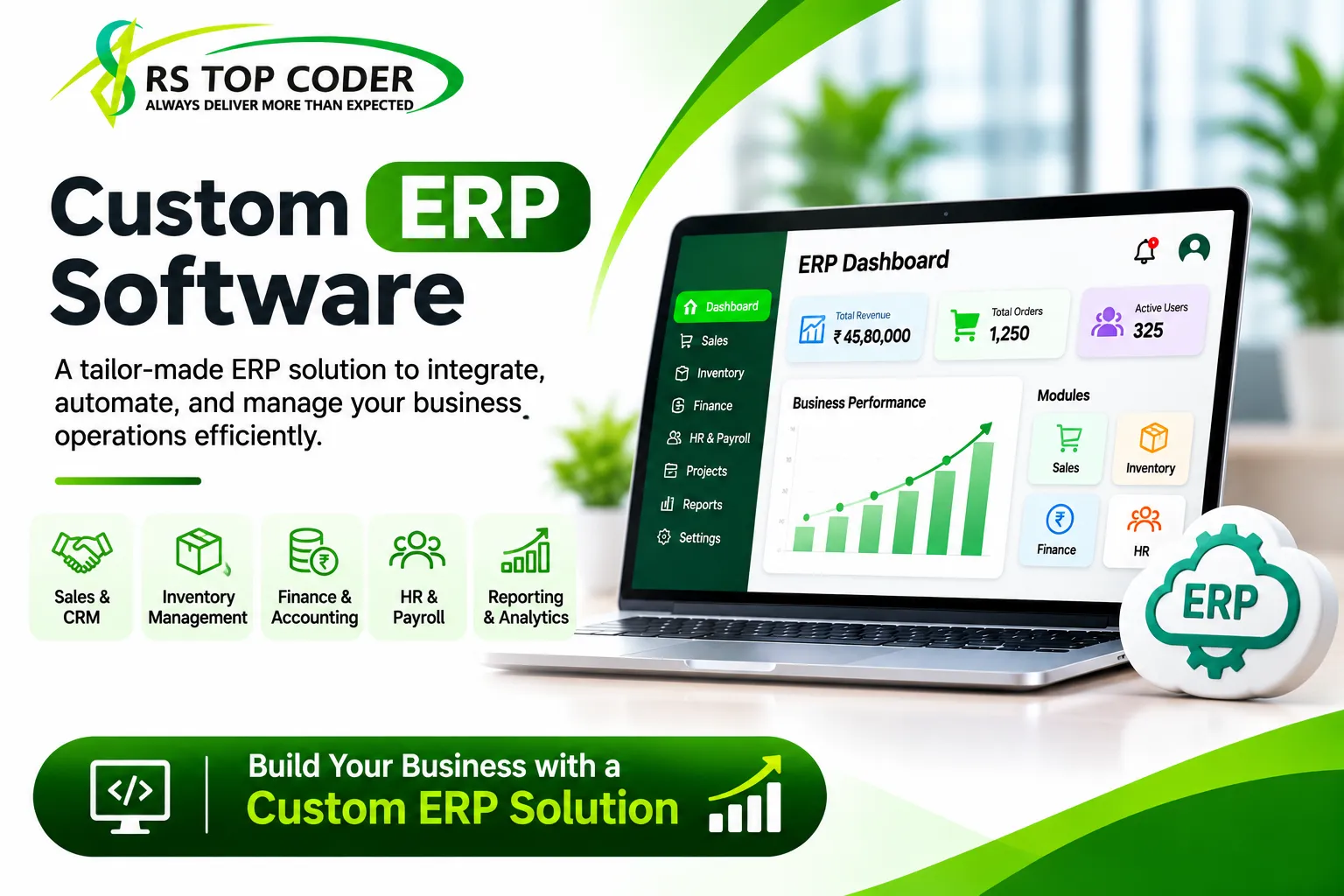
Comprehensive software modules designed for erp software operations.
What Is Manufacturing ERP
Manufacturing ERP is an enterprise software category built to connect shop-floor activity with planning, procurement, inventory, quality, and financial control in one system. Plants adopt it when production schedules, material availability, and cost tracking can no longer be managed reliably across spreadsheets and disconnected tools.
Manufacturers choose Manufacturing ERP to shorten planning cycles, improve material traceability, and give plant managers real-time visibility into orders, capacity, and variances. The category supports make-to-stock, make-to-order, and engineer-to-order models with workflows tuned to production environments rather than generic back-office tasks.
Discrete and process manufacturers, job shops, contract manufacturers, and industrial OEMs evaluate Manufacturing ERP when batch sizes, BOM complexity, or compliance requirements increase. Food, pharma, automotive, electronics, and metal fabrication firms commonly rely on this category to coordinate planning with execution.
Operational Scope
Teams typically configure Manufacturing ERP around master data, approval paths, role permissions, and reporting cadences that mirror how ERP Software buyers operate day to day. Core capabilities such as Production Planning & MRP, Shop Floor Control, Bill of Materials & Routings, Inventory & Warehouse are phased during rollout so departments adopt structured workflows without disrupting customer-facing commitments. Leadership gains consolidated visibility while functional teams retain controls suited to their responsibilities.
When Organizations Evaluate Manufacturing ERP
Organizations begin formal evaluation when production schedules drift because material availability and capacity data live in separate systems; shop-floor reporting is delayed, making it hard to identify scrap, downtime, and order delays early; bom revisions and engineering changes are not consistently reflected across planning and purchasing. These signals often appear after growth in users, locations, transaction volume, or compliance obligations. At that stage, patching spreadsheets or bolting on isolated tools costs more than implementing a category-aligned platform with clear ownership and integration standards.
Key Business Challenges
Before adopting Manufacturing ERP, many organizations struggle with process fragmentation and inconsistent data. Common issues include:
- Production schedules drift because material availability and capacity data live in separate systems.
- Shop-floor reporting is delayed, making it hard to identify scrap, downtime, and order delays early.
- BOM revisions and engineering changes are not consistently reflected across planning and purchasing.
- Costing relies on estimates instead of actual labor, material, and overhead consumption by job or batch.
- Quality holds, rework, and vendor non-conformance are tracked manually, slowing release to dispatch.
Left unaddressed, these operational gaps slow decision-making, increase rework, and make it harder to hold teams accountable for service levels or financial outcomes. Stakeholders across finance, operations, and customer-facing functions feel the impact through delayed reports, disputed numbers, and manual follow-ups that should be automated within Manufacturing ERP. A structured software category addresses root causes rather than symptoms.
Business Benefits
When implemented with clear scope and ownership, Manufacturing ERP can deliver measurable improvements across operations and management visibility:
- Unifies planning, production, inventory, and finance in a single source of operational truth.
- Improves on-time delivery through MRP-driven material planning and capacity-aware scheduling.
- Tracks lot, batch, and serial traceability from receipt through finished goods dispatch.
- Supports accurate job costing with labor, machine, and material capture at the operation level.
- Reduces stockouts and excess inventory with demand-linked procurement and warehouse controls.
- Strengthens quality workflows with inspection plans, NC tracking, and supplier corrective actions.
- Provides dashboards for OEE, WIP, yield, and margin by product line or plant.
- Scales across multiple plants, warehouses, and subcontractor workflows with role-based access.
Measured over quarters rather than weeks, investments in Manufacturing ERP Software often show improvements in unifies planning, production, inventory, and finance in a single source of operational truth; improves on-time delivery through mrp-driven material planning and capacity-aware scheduling; tracks lot, batch, and serial traceability from receipt through finished goods dispatch. Organizations with executive sponsorship, clean master data, and phased training typically see faster adoption and fewer rollback requests. The category also creates a foundation for analytics, automation, and integration projects that would be expensive to layer onto disconnected tools.
Core Modules
The following modules are commonly configured within Manufacturing ERP implementations. RS Top Coder tailors module depth, approvals, and integrations based on your ERP Software requirements:
- Production Planning & MRP — Generates material and capacity plans from sales orders, forecasts, and BOM structures with exception alerts.
- Shop Floor Control — Captures work order progress, machine assignments, labor hours, and output quantities against routings.
- Bill of Materials & Routings — Maintains multi-level BOMs, revisions, alternates, and operation sequences for accurate planning.
- Inventory & Warehouse — Manages raw, WIP, and finished goods with bin locations, reservations, and cycle counting.
- Procurement & Vendor Management — Automates RFQ, PO, GRN, and vendor performance tracking tied to production demand.
- Quality Management — Defines inspection stages, sampling rules, deviations, and CAPA linked to batches and suppliers.
- Maintenance Management — Schedules preventive maintenance and tracks breakdowns to reduce unplanned downtime.
- Costing & Financial Integration — Allocates material, labor, and overhead to jobs with posting rules aligned to accounting.
- Analytics & Plant Dashboards — Surfaces production KPIs, backlog, yield trends, and margin variance for leadership review.
Module depth is configured to match your operating model rather than enabling every feature on day one. RS Top Coder documents data flows between Production Planning & MRP, Shop Floor Control, Bill of Materials & Routings, Inventory & Warehouse, defines approval thresholds, and validates that each module produces the reports your managers rely on during daily and monthly reviews. Integrations with accounting, CRM, ERP components, payment gateways, HR systems, and custom APIs are scoped during discovery so duplicate entry is minimized from go-live.
Industries We Serve
Manufacturing ERP is evaluated by organizations that need dependable software for daily execution and leadership oversight. RS Top Coder frequently supports:
- Discrete Manufacturing — Assembly, fabrication, and component producers managing complex BOMs and routings.
- Process Manufacturing — Batch-oriented plants requiring formula control, yield tracking, and regulatory traceability.
- Automotive & Industrial — Suppliers and OEMs coordinating just-in-time schedules with strict quality documentation.
- Electronics & Engineering — Firms handling frequent ECOs, alternates, and subcontracted assembly operations.
- Food & Beverage — Producers managing expiry, batch recall readiness, and hygiene-related quality checks.
- Pharma & Medical Devices — Regulated manufacturers needing audit trails, batch records, and validated process control.
Regardless of sector, successful deployments align terminology, compliance needs, and KPI definitions with how teams already measure performance. RS Top Coder frequently supports organizations in Discrete Manufacturing, Process Manufacturing, Automotive & Industrial, Electronics & Engineering, adapting workflows while keeping the platform maintainable for internal administrators. Sector experience reduces rework during configuration and helps anticipate audit, integration, and reporting requirements early in the project.
Why Choose RS Top Coder
RS Top Coder implements Manufacturing ERP around your plant layout, BOM structures, and reporting cadence rather than forcing a generic template. We map shop-floor workflows during discovery, configure MRP and costing rules with your finance team, and validate integrations with scales, barcode devices, and accounting systems before go-live.
Implementation Methodology
RS Top Coder follows a structured delivery path: discovery workshops, process mapping, solution design, iterative configuration, integration testing, user acceptance, and phased go-live. We document assumptions, migration rules, and rollback plans so stakeholders know what happens at each milestone. Training materials and admin guides are tailored to roles rather than delivering generic manuals that teams rarely use.
Post-Launch Support
After launch, our team supports performance tuning, new branch or department onboarding, additional integrations, and reporting changes as your business evolves. Issue triage, enhancement backlogs, and release planning are handled transparently so internal IT and business owners share the same roadmap. This ongoing partnership keeps Manufacturing ERP aligned with operational reality instead of freezing at initial configuration.
Product lineup
17 modules in this catalog
01
Production Planning & MRP
9 features
02
Shop Floor Control
9 features
03
Bill of Materials & Routings
9 features
04
Inventory & Warehouse Management
9 features
05
Procurement & Vendor Management
9 features
06
Quality Management
9 features
07
Maintenance Management
9 features
08
Production Costing & Finance Integration
9 features
09
Sales Order & Customer Commitment
9 features
10
Engineering Change Management
9 features
11
Subcontractor & Outside Processing
9 features
12
Capacity Planning & Scheduling
9 features
13
Tooling & Die Management
9 features
14
Lot Batch & Serial Traceability
9 features
15
Plant Analytics & Operational KPIs
9 features
16
Compliance & EHS Management
9 features
17
Master Production Scheduling
9 features
Full catalog
Product modules & capabilities
Expand each product to review its feature set.
01 Production Planning & MRP Generates material requirements and capacity plans from sales orders, forecasts, and multi-level BOM structures. Production planners use it to explode demand, propose purchase and work orders, and review exception messages for shortages or overload. The module reduces stockouts, aligns procurement with shop schedules, and gives plant leadership dependable build plans.
02 Shop Floor Control Captures work order execution on the production floor including operation start, labor booking, machine time, scrap, and output quantities. Supervisors and operators use terminals or mobile devices to report progress against routings in near real time. The module improves WIP visibility, supports accurate job costing, and helps leadership respond to delays before customer commitments slip.
03 Bill of Materials & Routings Maintains engineering structures including multi-level BOMs, revisions, alternates, and operation sequences with standard times and work centers. Engineering, planning, and costing teams rely on it as the master definition of how products are built. Accurate structures drive MRP, shop floor dispatch, and margin analysis while controlling engineering change impact.
04 Inventory & Warehouse Management Manages raw materials, WIP, finished goods, and spare parts across plants and warehouses with bin locations, reservations, and cycle counting. Stores personnel and warehouse supervisors use it for receipts, issues, transfers, and physical inventory. The module improves stock accuracy, supports lot traceability, and feeds financial valuation with reliable quantity records.
05 Procurement & Vendor Management Automates the procure-to-pay cycle from requisition through RFQ, purchase order, goods receipt, and vendor performance review tied to production demand. Buyers and procurement managers use it to negotiate rates, track lead times, and ensure material availability for planned orders. The module strengthens supplier discipline, reduces emergency purchases, and links spend to MRP and project.
06 Quality Management Defines inspection plans, sampling rules, non-conformance workflows, and corrective actions linked to batches, operations, and suppliers. Quality engineers and inspectors use it at incoming, in-process, and final stages to document results and hold nonconforming material. The module supports compliance audits, reduces customer rejections, and connects quality data to production and vendor records.
07 Maintenance Management Schedules preventive maintenance, logs breakdowns, tracks spare parts consumption, and records downtime impact on production assets. Maintenance planners and technicians use it to plan work orders, assign crews, and document repairs with cost allocation to assets or cost centers. The module reduces unplanned downtime, extends equipment life, and supports reliability programs across the plant.
08 Production Costing & Finance Integration Allocates material, labor, machine, and overhead costs to jobs, batches, and finished items with posting rules aligned to the general ledger. Cost accountants and controllers use it to monitor standard versus actual variances and close WIP at period end. The module improves margin visibility by product and customer order while ensuring inventory and COGS reflect operational reality.
09 Sales Order & Customer Commitment Manages customer sales orders from entry through credit check, allocation, production linkage, and shipment scheduling for make-to-order and make-to-stock models. Customer service and inside sales teams use it to promise dates based on ATP and capacity. The module connects demand to MRP, improves on-time delivery performance, and maintains order change history for dispute resolution.
10 Engineering Change Management Controls engineering change orders affecting BOMs, routings, documents, and affected open orders with structured review and implementation workflows. Engineering managers and document controllers use it to assess impact, obtain approvals, and coordinate effective dates with production and purchasing. The module reduces unauthorized changes, prevents obsolete builds, and maintains audit trails.
11 Subcontractor & Outside Processing Manages send-out operations where production ships materials to subcontractors for specific routing steps and receives processed goods back with cost tracking. Production planners and stores teams coordinate challans, receipts, and vendor invoices against subcontract purchase orders. The module maintains WIP visibility across vendor sites and ensures components and costs reconcile at operation.
12 Capacity Planning & Scheduling Finite and infinite capacity scheduling tools align work orders to work centers, shifts, and labor skills with visual Gantt views for production planners. Planners drag operations, resolve conflicts, and publish schedules supervisors execute on the shop floor. The module improves throughput, reduces idle time, and connects schedule changes to material and tooling availability checks.
13 Tooling & Die Management Tracks molds, dies, fixtures, and gauges with life limits, maintenance history, and assignment to work orders or machines. Tool room staff and production engineers use it to ensure correct tooling is available before scheduling and to plan refurbishment before failure. The module reduces scrap from worn tools, controls tooling investment, and links tool usage to product costing where applicable.
14 Lot Batch & Serial Traceability End-to-end traceability from supplier batch through WIP operations to customer shipment with forward and backward genealogy inquiries. Quality and compliance teams use it for recall simulations, customer audits, and regulatory batch records. The module links lot attributes to inspection results, operators, and equipment for complete manufacturing history.
15 Plant Analytics & Operational KPIs Surfaces manufacturing KPIs including OEE, schedule adherence, yield, scrap rates, backlog, and margin variance in role-based views for plant and corporate leadership. Operations managers drill from summary tiles to order and shift detail without exporting spreadsheets. The module connects shop floor, quality, and finance data for consistent operational review meetings and continuous improvement.
16 Compliance & EHS Management Documents environmental health and safety incidents, permits, training records, and audit findings with linkage to affected work areas and corrective tasks. EHS officers and plant managers use it to meet regulatory obligations and track closure of safety actions. The module supports ISO and OSHA-style programs while integrating incident data with maintenance and production downtime where relevant.
17 Master Production Scheduling Executive-level scheduling horizon that balances demand, inventory targets, and capacity to publish a feasible production plan before detailed MRP runs. Supply chain and plant managers use it to align sales forecasts with production rates and inventory policies. The module bridges S&OP decisions with operational planning and reduces constant replanning from unconstrained demand inputs.
FAQs
Common questions about Manufacturing ERP
What is Manufacturing ERP and who should use it?
Manufacturing ERP is a software category that connects production planning, shop-floor execution, inventory, procurement, quality, and finance in one platform. It suits discrete and process manufacturers that have outgrown spreadsheets or siloed tools and need reliable MRP, batch traceability, job costing, and plant-level reporting. SMEs scaling to multiple lines and enterprises standardizing across plants both benefit when order volume, BOM complexity, or compliance requirements increase.
How is Manufacturing ERP different from generic ERP?
Generic ERP often emphasizes finance and sales without deep shop-floor, routing, and MRP capabilities. Manufacturing ERP includes BOM management, capacity planning, WIP tracking, quality at operation level, and production costing models aligned to how factories actually run. That reduces heavy customization, improves material accuracy, and gives planners and plant managers tools designed for batches, jobs, and subcontract flows rather than retail or service workflows alone.
Can Manufacturing ERP integrate with machines, barcode, and accounting tools?
Yes. Implementations commonly integrate with barcode scanners, weigh scales, PLM for engineering changes, warehouse automation, and accounting platforms such as Tally or SAP components. RS Top Coder defines data mappings for items, UOMs, work orders, and GRN postings, then validates sync rules so shop-floor capture flows into inventory and finance without duplicate entry or reconciliation delays at month-end.
Why choose RS Top Coder for Manufacturing ERP?
RS Top Coder delivers Manufacturing ERP Software with structured discovery, phased rollout, and ownership of integrations and data migration. We align modules to your production model—make-to-order, batch, or repetitive—and train planners, stores, and supervisors on practical workflows. Post-launch support covers performance tuning, new plants, and reporting changes so the system continues supporting growth and audit readiness.
Explore further
Related pages
Evaluate Manufacturing ERP for your team
Schedule a walkthrough tailored to your workflows, integrations, and rollout timeline.
Book a product demo